AI Research and Technology Leader
Foundation models, agentic AI, structured data, reinforcement learning, and simulation
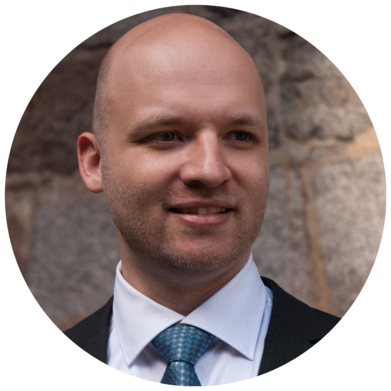
Tassilo J. Klein, Ph.D.
AI research and technology leadership across foundation models, agentic AI, and enterprise systems.
My work connects advanced AI research with real-world systems, from representation learning and language models to agents, simulation, and AI-native products.
About
I am an AI research and technology leader with 15+ years of experience spanning foundation models, agentic AI, reinforcement learning and simulation, natural language processing, privacy-preserving learning, continual learning, and multimodal representation learning.
I have built research programs from scientific questions and model design through data, evaluation, and transfer into real-world systems. At SAP, my work included shaping machine learning research for complex, structured environments, building research teams, defining technology agendas, and connecting industrial research with an international academic network.
I have authored 50+ peer-reviewed publications, including five first-author ACL papers, and am a co-inventor on 30+ patents. My research has received more than 5,500 citations.
My academic background includes postdoctoral research at MIT CSAIL and Harvard Medical School, a Ph.D. summa cum laude from the Technical University of Munich, and membership in ELLIS.
LinkedIn · Google Scholar · GitHub · ORCID
Current Focus
| Area | Focus |
|---|---|
| Foundation Models | Learning across structured, relational, and multimodal data in complex environments |
| Agentic AI | Agents, application world models, planning, tool use, and coordinated action |
| Reinforcement Learning & Simulation | Multi-agent learning, simulation environments, and synthetic experience for decision-making |
| Learning and Adaptation | Self-supervised learning, contrastive learning, post-training, and continual adaptation |
| Responsible AI | Privacy, robustness, controllability, safety, and responsible deployment |
| Representation Learning | Shared representations across language, vision, structured data, and multimodal systems |
Recent Publications & Updates
[2026.09] - Tabular Foundation Model for Generative Modelling accepted at NeurIPS 2026
[2026.05] - Three papers accepted at the ICML 2026 Workshop on Foundation Models for Structured Data
- A Generative Foundation Model for Heterogeneous Tabular Data
- TableFactory: Generating Semantically Linked Tabular Data via Multi-Agent Behavioral Simulation
- Statistically Indistinguishable, Operationally Distinct: A Formal Barrier for Tabular Foundation Models
[2026.02] - New preprint on how agentic AI reshapes enterprise boundaries
[2025.05] - Paper accepted at ACL 2025 on controllable language generation
Selected Publications
-
Tabular Foundation Model for Generative Modelling · NeurIPS 2026 · arXiv
-
Differentially Private Federated Learning: A Client-Level Perspective
Paper -
Learning to Remember: A Synaptic Plasticity Driven Framework for Continual Learning
CVPR 2019 -
DeepNAT: Deep Convolutional Neural Network for Segmenting Neuroanatomy
NeuroImage -
Contrastive Self-Supervised Learning for Commonsense Reasoning
ACL 2020 -
Towards Zero-shot Commonsense Reasoning with Self-supervised Refinement of Language Models
EMNLP 2021
For the complete publication record, see Google Scholar or ORCID.
Publication History
[2024.10] - Papers presented at the NeurIPS Workshop on Table Representation Learning
- SALT: Sales Autocompletion Linked Business Tables Dataset
- PORTAL: Scalable Tabular Foundation Models via Content-Specific Tokenization
[2023.07] - Paper published at ACL 2023
[2022.05] - Paper published at ACL 2022
[2021.11] - Paper published at EMNLP 2021
[2021.11] - Paper published in Findings of EMNLP 2021
[2021.06] - Paper published at IPMI 2021
[2021.04] - Co-organized the ICML Workshop on Self-Supervised Learning for Reasoning and Perception
[2020.07] - Paper published at ACL 2020
[2020.02] - Paper published in NeuroImage: Clinical
[2019.10] - Paper accepted at ICCV 2019
[2019.07] - Paper published at ACL 2019
[2019.06] - Paper published at CVPR 2019
[2018.04] - Paper published in NeuroImage
[2017.12] - Preprint on client-level privacy in federated learning
Research Leadership
- Built and led multidisciplinary AI research teams
- Defined research agendas spanning models, data, evaluation, and deployment
- Established international research collaborations connecting industrial challenges with leading universities and AI laboratories
- Translated scientific advances into practical capabilities across research, engineering, and product organizations
- Mentored researchers and Ph.D. students across academia and industry
Service & Mentorship
- Reviewer and program committee member for ACL, EMNLP, CVPR, and NeurIPS
- Co-organizer of the ICML Workshop on Self-Supervised Learning for Reasoning and Perception
- Scientific advisor on agentic systems, AI-native products, and applied AI strategy
Former Students & Research Mentees
Researchers I have mentored have continued into research, engineering, and faculty-track roles across leading AI laboratories, universities, and technology companies.
- Stefan Lionar, Ph.D. student at the National University of Singapore and Sea AI Lab
- Jan Nikolas Morshuis, doctoral researcher at the University of Tübingen and Tübingen AI Center
- Aiham Taleb, Senior Applied Scientist in Generative AI at Amazon Web Services
- Artur Speiser, AI Research Scientist at Exscientia
- Jannik Wolff, Machine Learning Research Scientist and Research Associate at BIFOLD
- Daniel Dorda, Scientific Software Engineer at uniqFEED and researcher at ETH Zürich
- Max Bain, Research Scientist at Google DeepMind
- Mahdyar Ravanbakhsh, Principal Research Scientist at Zalando
- Oleksiy Ostapenko, Research Scientist at ServiceNow AI Research
- Colin Samplawski, Ph.D. student at UMass Amherst and Advanced Computer Scientist at SRI International
- Mihai M. Puscas, Computer Vision Researcher at SPORTTOTAL.TV
- Sandro Pezzelle, Assistant Professor in Responsible AI at the University of Amsterdam
- Frederik Pahde, Research Associate and Ph.D. candidate at Fraunhofer HHI and TU Berlin
- Shailza Jolly, Research Scientist at Amazon Alexa AI
- Denis Dushi, Machine Learning Engineer at Amazon
- Vadim Tschernezki, Ph.D. student in Computer Vision at the University of Oxford
- Robin C. Geyer, Ph.D. student at the Institute for Machine Learning at ETH Zürich
For research discussions, advisory work, and technology leadership opportunities, connect with me on LinkedIn or explore my work on Google Scholar.
Last updated August 2026